

Hard Jawline Chewing Gum | ONEJAW
Ships within 1-2 business days
Made in Denmark
Fast & reliable delivery
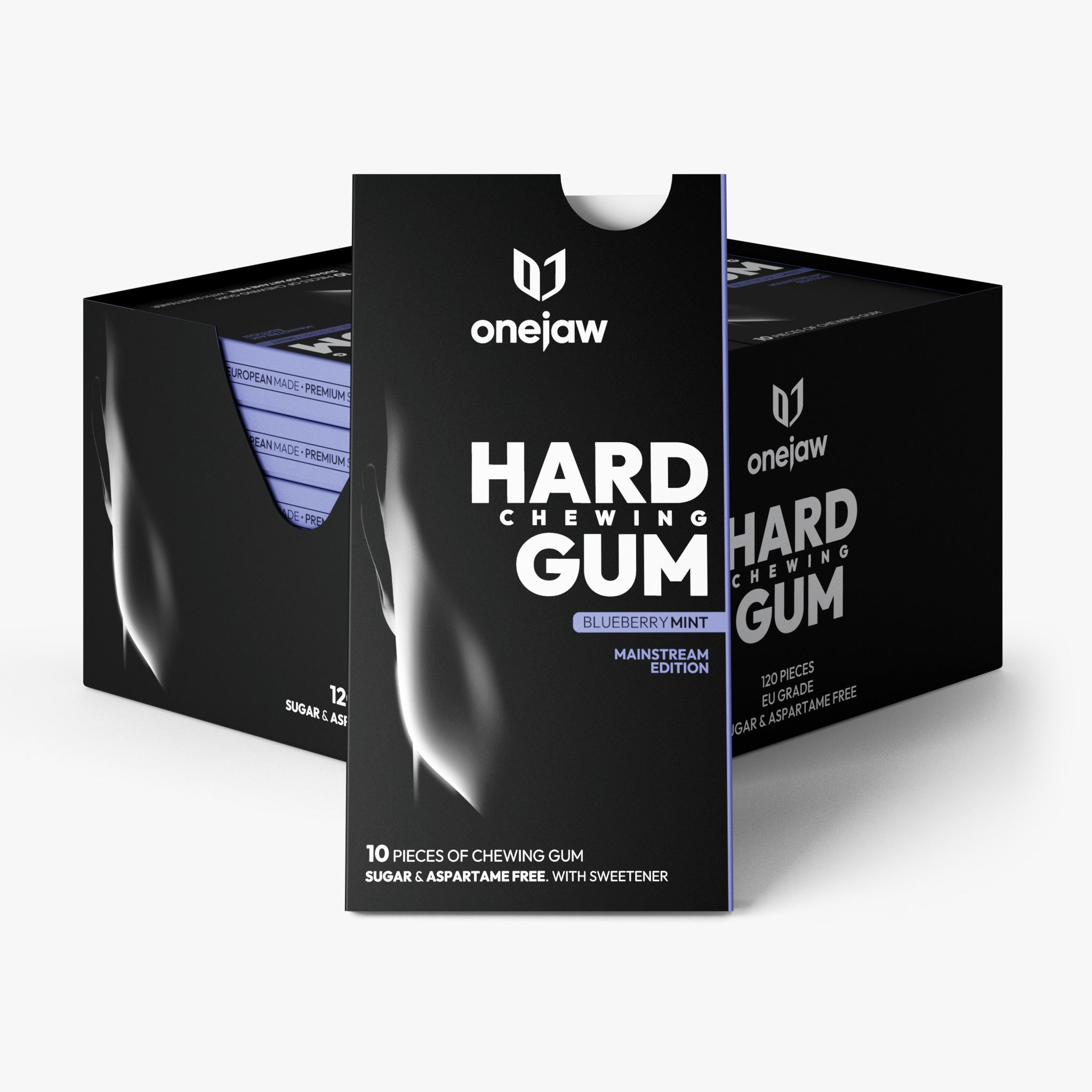
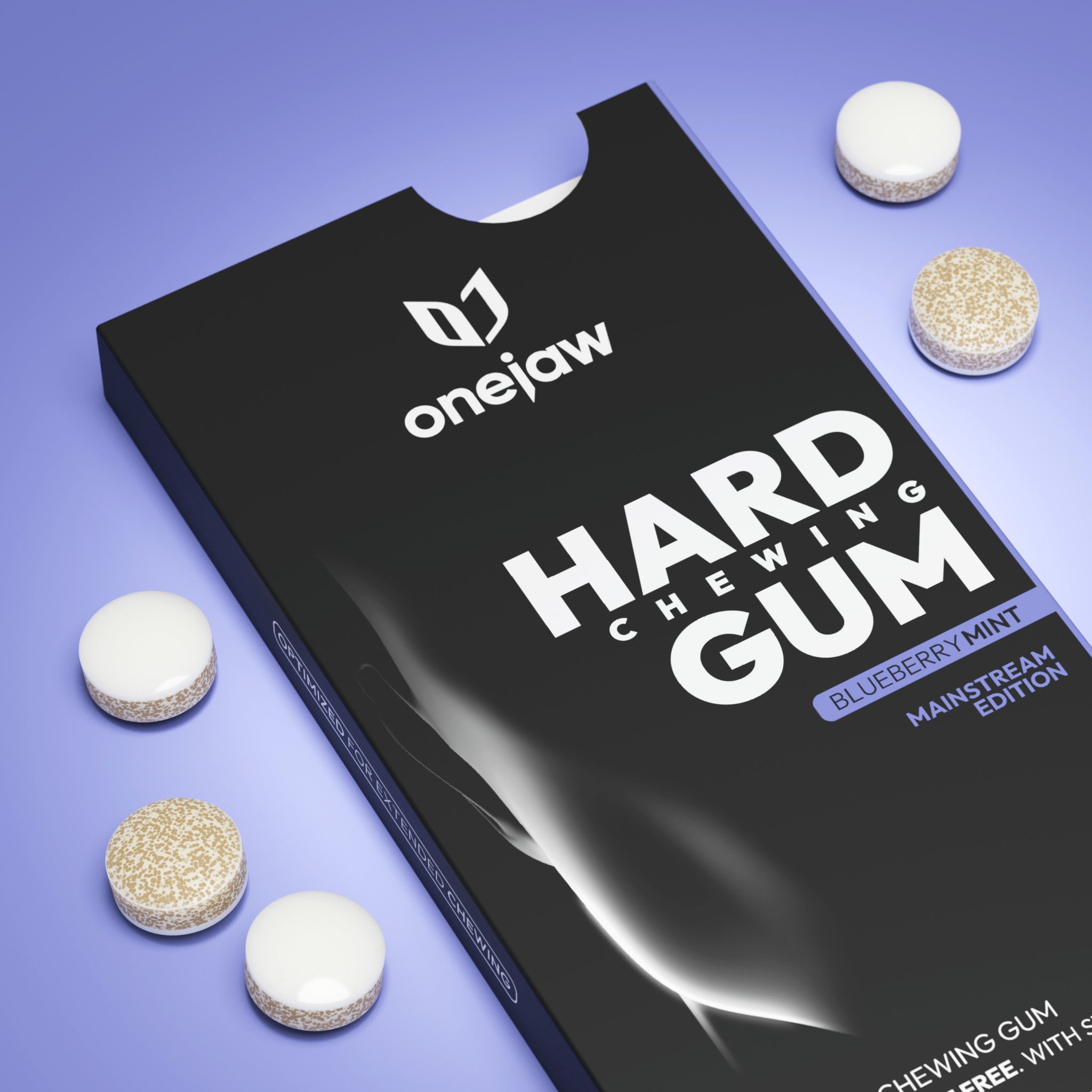
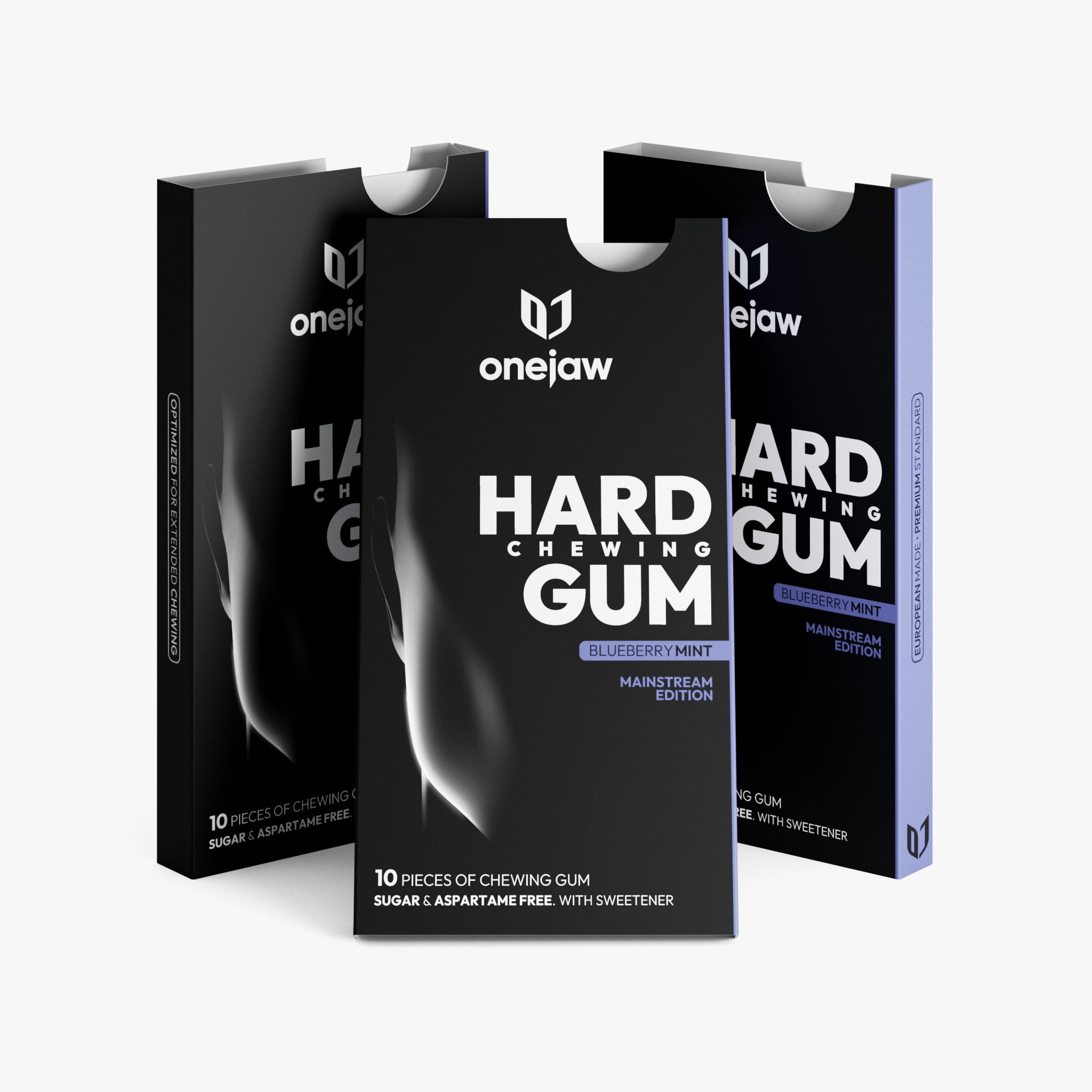
It's not just hard gum. Calibrated resistance that holds its mass and bite for your entire session. Training for the only muscles everyone sees.
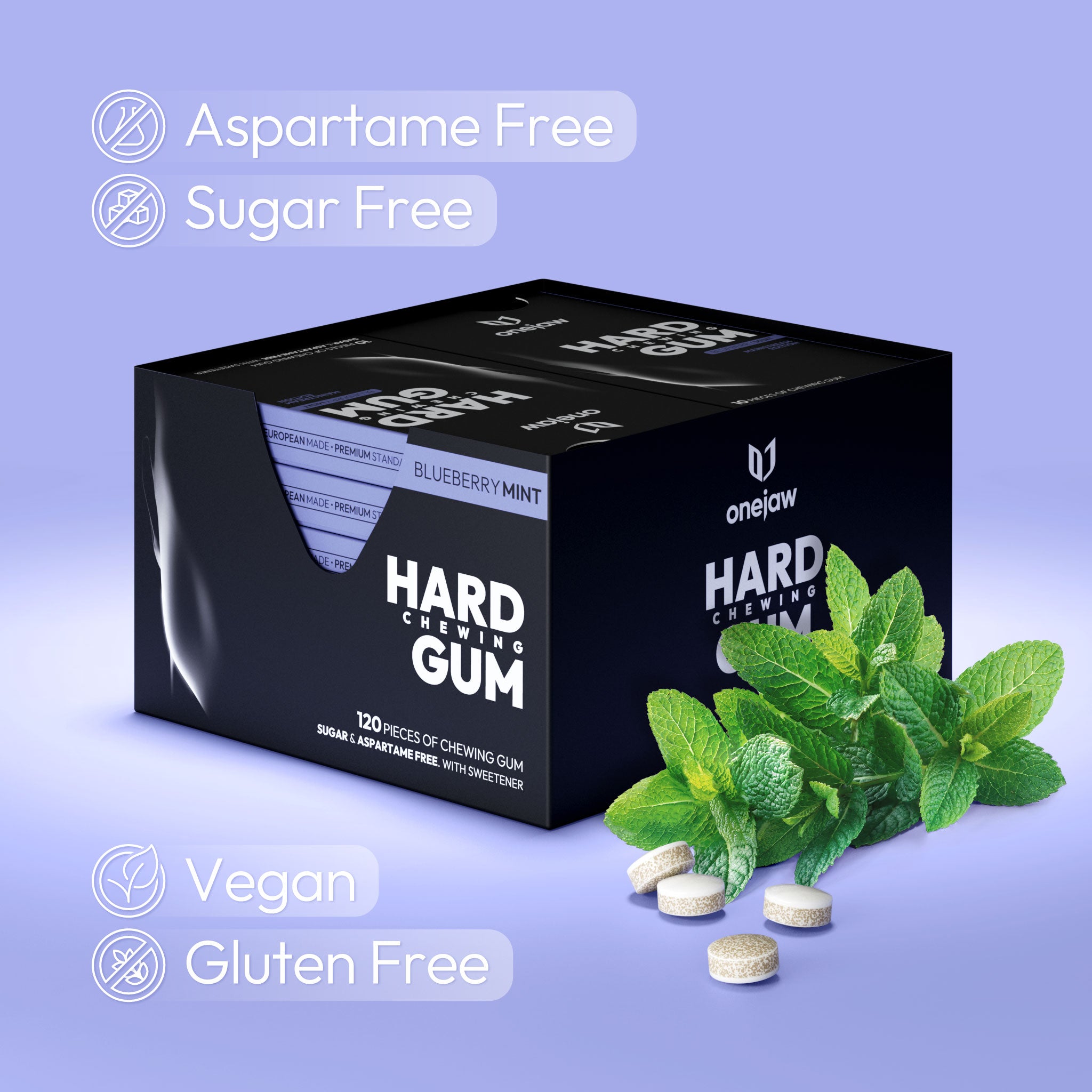
- Holds mass & flavorfirst chew to last, never chews down to nothing
- Never stickybraces-safe
- Sugar & aspartame freetooth friendly
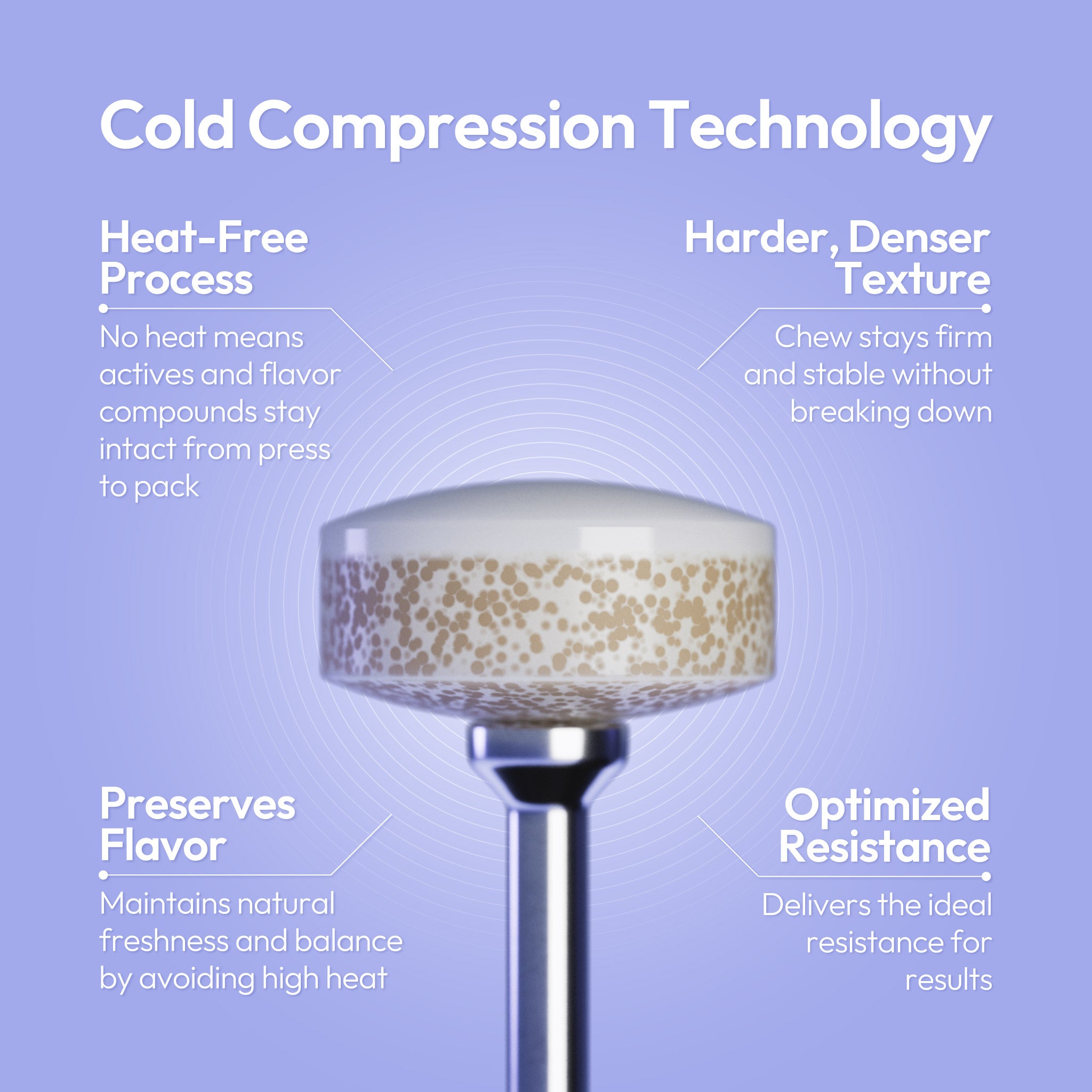
- Made in Denmarkusing cold-compressed technology
PAIRS WELL WITH:
[ Why train a jaw at all ]
THE HONEST VERSION OF THE PROBLEM.
No fear, no promises. Just the mechanism. If this makes sense, the gum makes sense.


YOUR JAWLINE IS PART MUSCLE
The masseter sits at the corner of your jaw, right where the jawline is defined. Like any muscle, it builds with use and fades without it.
MODERN FOOD STOPPED WORKING IT
Your ancestors chewed tough food for hours a day. You chew soft food for minutes. The muslce tone that holds your face together goes untrained.
CHEWING RESISTANCE TRAINS IT BACK
Chewing against calibrated resistance, daily. Not the hardest gum possible, the hardest you should train with.
[ The ideal hardness ]
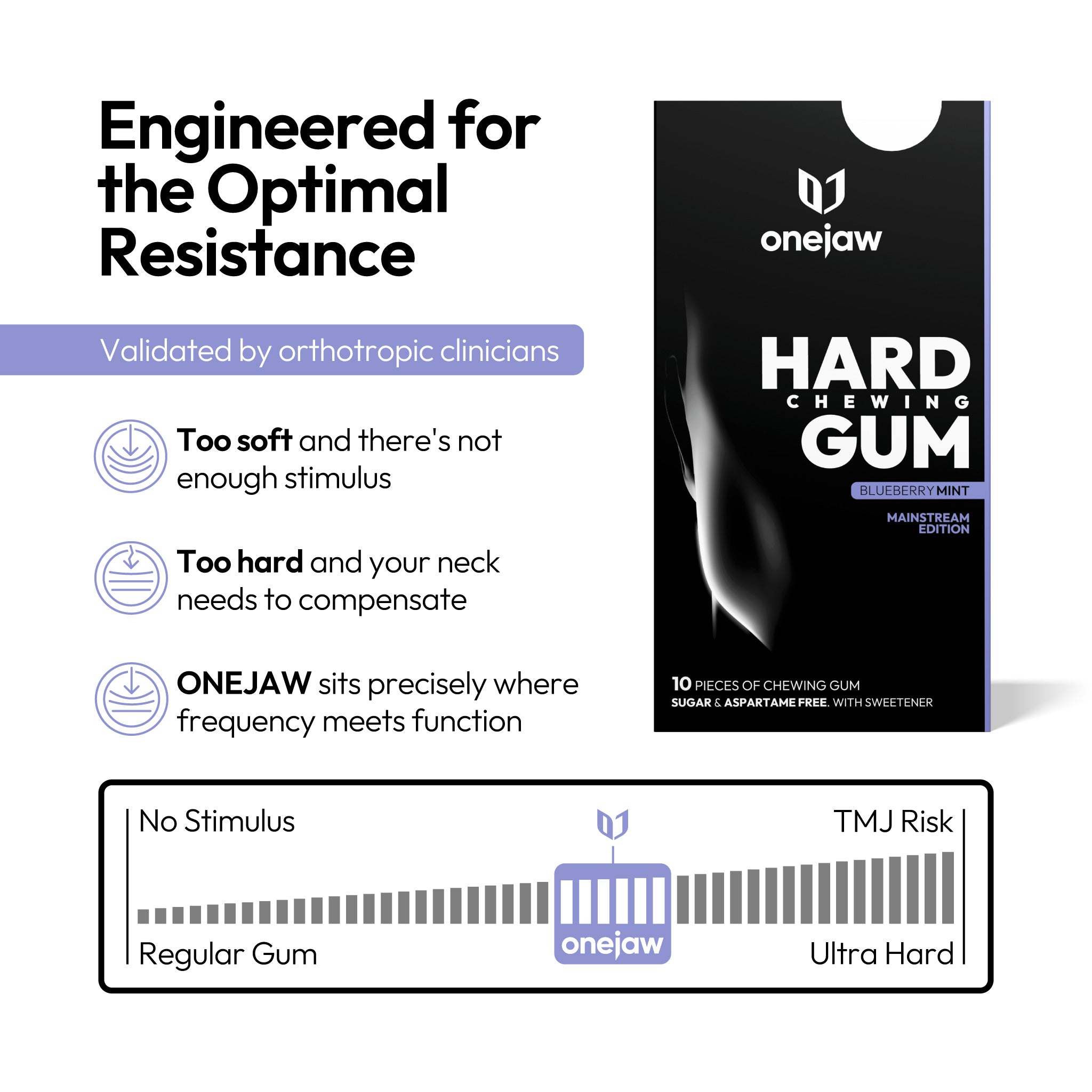
ENGINEERED FOR THE RIGHT RESISTANCE.
Too soft and there's no stimulus. Too hard and your neck and back compensate. ONEJAW sits precisely where effort meets function.
Collapses in seconds. There's no resistance left to work against, so the muscles never get a reason to adapt.
Starts with some bite, but that early hardness comes from additives, not design, it fades before the session does.
Calibrated where effort meets function.
Firm enough to build endurance and tone, stable enough to keep the chew vertical and TMJ-safer.
Frequency over force: 2–3 sessions a day, after meals.
Past the useful zone, load shifts from muscle to the jaw joint. Neck and back start compensating, sessions get cut short, and consistency dies.
[ Second opinion ]
DON'T BELIEVE US? HEAR IT FROM THE FOUNDER OF MEWING.
Mike Mew on hard gum, why "harder" is the wrong race, and what ONEJAW does differently. Sixty-eight seconds, his words.

[ OUR process ]
SEE THE DIFFERENCE, SIDE BY SIDE.
Switch between the two processes and watch what heat does to the structure of your gum.
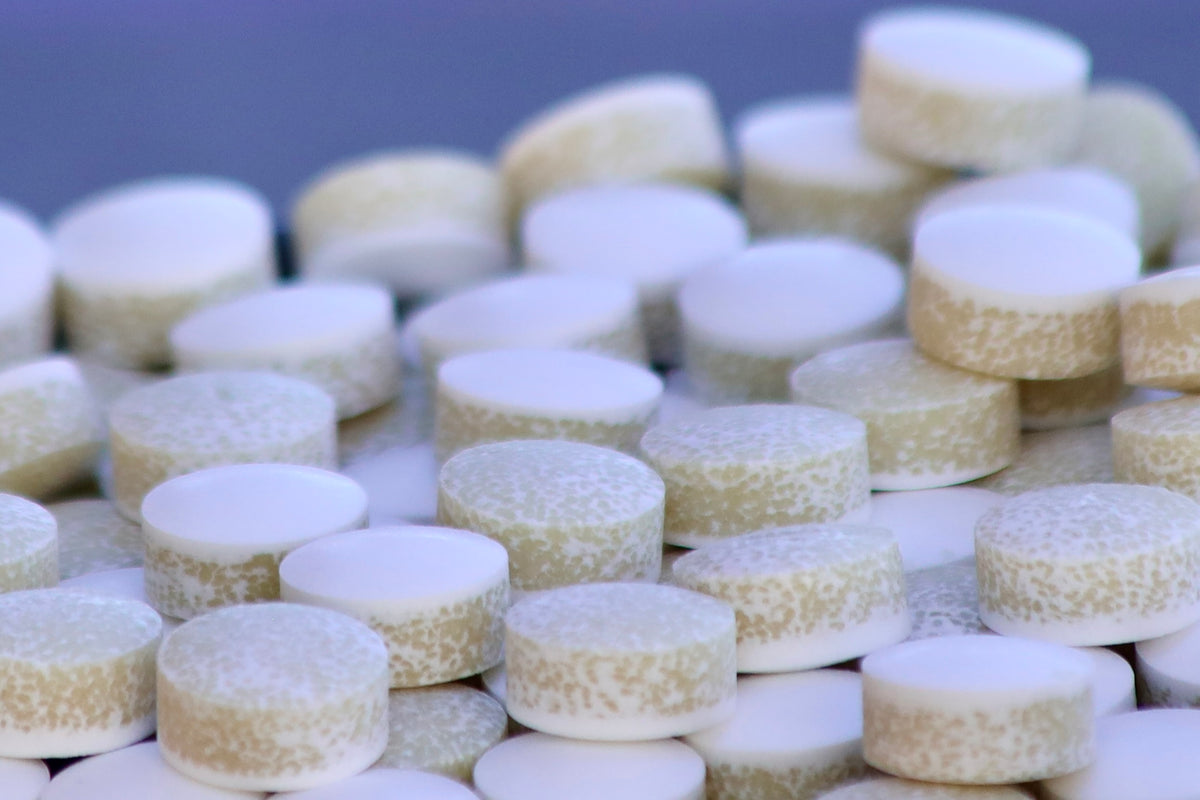
Cold-Compression
The base, blueberry mint flavor, and actives are blended at room temperature and pressed into dense tablets. No heat, no plasticizers, no artificial softeners. Keeping the structure intact means it starts firmer and holds resistance longer.
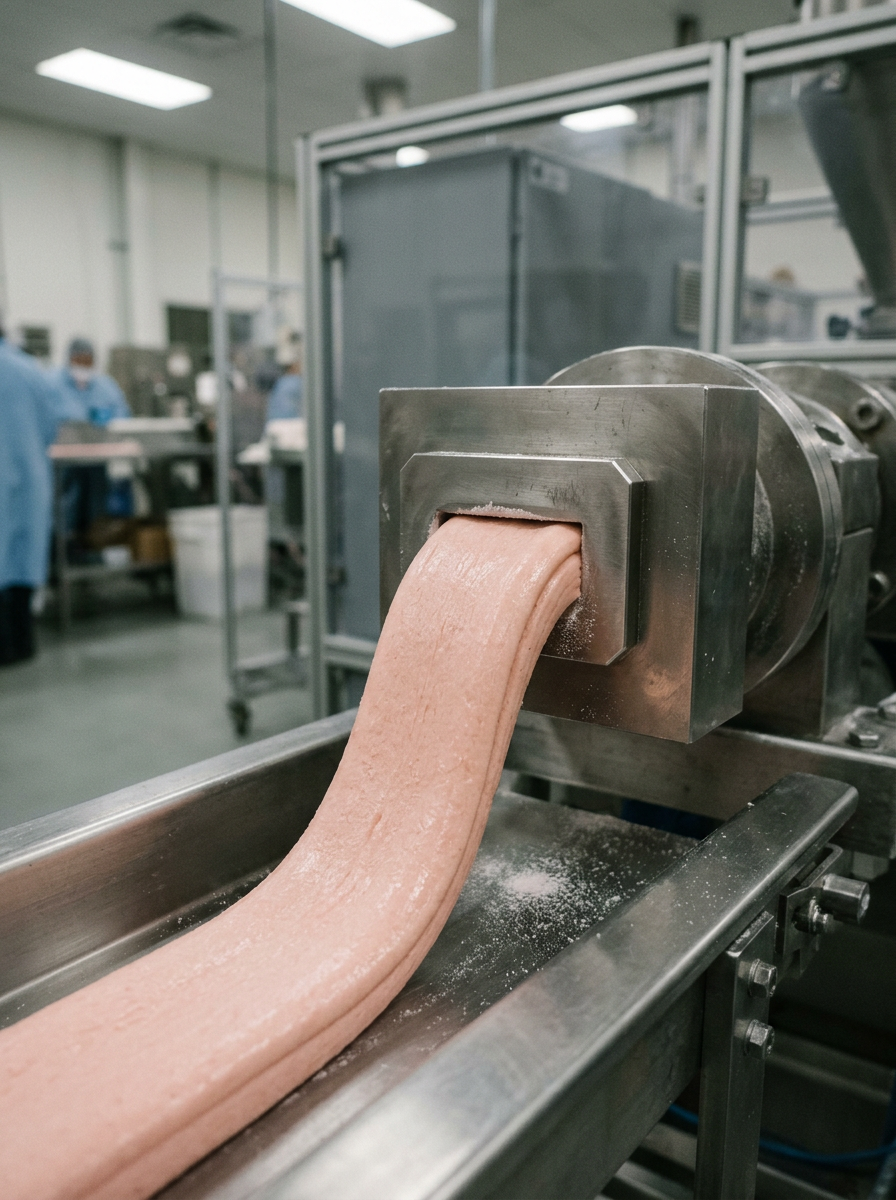
Standard Gum
Conventional gum is extruded. Heated, melted, and stretched into sheets or pellets. High heat collapses the structure, so plasticizers and artificial softeners are added back to keep it chewable. Early hardness comes from additives, not design, and fades fast.
[ Consistency stories ]
PEOPLE ALREADY DOING THE WORK.
Let customers speak for us
This is an excellent product. The onejaw gum tasted nice, kept its chewyness, and will be my go-to gum into the future. Also, cool pack!

Thx it really helps me train my jaw muscles 💪🏿❤️
very good
love this gum, put two in and it works amazing when im in the gym
love it
that gum is actually something amazing, I absolutely love it.
Easy and quick
Amazing gum. Holds its density for the full session, which is the thing I want from a training gum and the flavour lasts. Ive been using it daily for a few months now. Great product.
Super produit ! Livraison très rapide, excellente qualité et goût vraiment agréable. Le chewing-gum a une bonne résistance et permet vraiment de bien travailler la mâchoire. Très satisfait de mon achat, je recommande à 100 % !
Super produit ! Livraison très rapide, excellente qualité et goût vraiment agréable. Le chewing-gum a une bonne résistance et permet vraiment de bien travailler la mâchoire. Très satisfait de mon achat, je recommande à 100 % !
shipped quick and arrived quick
The flavor is really great, and I chew this for several hours a day since I watched Dr Mew say we should be chewing for hours a day. Also all the hard gum brands either hide where they’re from or are made in china, and you seem like the only ones who show it so nice job.
Anyone thinking about making a purchase, I promise you, you won’t be disappointed. Personally, I tend to have an issue with normal gums like your orbits etc… because of the unnatural flavour and the lack of chewing so the fact that there is finally a company on the market that just gets the flavour, the consistency and the hardness right makes consistently buying these packs a “no brainer”.
Très facile !
C’est la troisième fois que je commande ce chewing-gum. La texture tient beaucoup mieux et le goût dure plus longtemps qu’un chewing-gum ‘normal’. Je le recommande !
Made by those who live it. ONEJAW started as the tools we wished existed while practicing Mike Mew's philosophy ourselves. Engineered in Denmark because that is where we found people who take chewing gum as seriously as we do.
[ The thinking behind ONEJAW ]
FAIR QUESTIONS.
What is in the gum?
Six things.
Gum base. Sorbitol as the sweetener. Natural mint flavourings. Natural blueberry flavouring with other natural flavourings. Sucralose as flavour enhancer, under 0.04 g. Alpha-tocopherol as antioxidant, under 0.04 g.
That is the full list. No sugar, no plasticisers beyond the base, nothing added to make it feel harder than it is. The resistance comes from cold compression, not from the ingredient list.
Why not just chew the hardest gum possible?
Facial transformation is not driven by brute force, but by how long and how consistently the muscles work.
In discussions with leading orthotropists and orthodontists, we learned that extremely hard gums create tension in the jaw and neck, which limits effective chewing.
ONEJAW was designed with the perfect resistance to allow for the right chewing that supports overall facial development.
Isn't harder always better for muscle training?
Not for this muscle group. Jaw tone is endurance, closer to posture than to a bench press. High repetition against moderate resistance builds it; occasional maximal effort mostly builds soreness.
How long until I notice anything?
Weeks, not days. Most people feel the muscles working in the first sessions and notice tone changes over 4–8 weeks of daily use. Slow is the honest speed. Anyone promising days is selling you something.
Why would chewing more frequently matter?
Because facial muscles respond to consistent, controlled use, not single hard efforts.
Chewing more times keeps the muscles active for longer, building endurance and tone, which supports facial structure more effectively than a few hard bites.
Is it safe for my jaw joint (TMJ)?
The protocol is built around the joint: vertical chewing, calibrated resistance, and clear stop signals, pain, clicking, or locking. Thirty minutes is the baseline session; beyond that, your jaw sets the limit. No pain, no clicking, no locking: keep going. Any of those: stop. If you have an existing TMD, check with your dentist before starting.
Something else on your mind? Ask us directly