


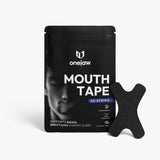
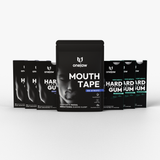



Let's be clear from the start: hard gum is not a replacement for anything. It's a tool to help claw back some of the chewing time we've all lost. But why is there such a huge chewing deficit in the first place?
Soft food gets blamed for the modern jaw's shrinkage, and that's half the story. Texture is one thing. Time spent chewing is another.
Western industrialised culture has spent 150 years systematically engineering chewing time out of your day: the restaurant, the clock, the screen.
Chew a stick of gum for ten minutes without fixing any of that, and you've treated a symptom while the cause keeps running.
The restaurant is engineered to rush you

Start with the restaurant, because it's the most deliberately designed example. Fast-food chains manipulate your eating speed directly. Cheese puffs and refined pastries are built to melt almost instantly in your mouth, a trick food scientists call vanishing calorie density: your brain never registers real volume, so it never sends the signal to slow down.
The music overhead isn't random either. Tracks over 120 BPM measurably push your chewing cadence to match the tempo, and people take more bites per minute and chew less thoroughly under fast music than under silence or slow jazz.
The harsh white lighting and aggressive red-and-yellow colour schemes are tuned to nudge you into sympathetic mode, the fight-or-flight state, creating just enough subconscious urgency to make you want to eat and leave. Menu items are engineered for dynamic contrast too: crunchy shell, soft centre, a nugget, a stuffed crust. That contrast keeps your brain chasing the next hit instead of assessing what you've actually eaten.
Even the furniture is premeditated. Hard chairs, tight tables, high-traffic walkways, all designed to feel mildly uncomfortable after 15 to 20 minutes, so you clear out and the next paying customer sits down.
None of this is incidental. Every lever in that room pulls toward the same outcome: faster bites, less chewing, more consumed, more profit.
The clock did the same thing, slower
Zoom out past any single restaurant and the wider culture runs the identical play, just less visibly. Industrial time discipline, at school and at work, shrank the lunch hour and taught generations that sitting down to chew a meal is unproductive. Our time is better spent working.
On top of that cultural imperative, convenience stripped out the factors that used to pace eating naturally. For almost all of human history, food required foraging, hunting or real preparation, which built in anticipation and attention by default. Drive-thrus and delivery apps deleted that process entirely, so food gets treated as fuel to inject rather than something to work through.
Your nervous system doesn't help. It's largely stuck on chronic low-grade stress from work, money, status, speed and notifications, which keeps your body in a permanent mild fight-or-flight state. A body that believes it's under threat consumes resources, food included, as fast as it possibly can.
The screen is probably within arm's reach
Chewing is a sensorimotor process. Your brain continuously tracks the texture and particle size of food in your mouth to decide when it's safe to swallow, and safe here means more than choke hazard. It means ready for the next phase of digestion, because the stomach is supposed to receive food as pulp, not chunks.
Shift your focus to a phone or a TV and that feedback loop breaks down. You default to fast, under-chewed, mindless bites because your attention isn't there to regulate the process.
Worse, your jaw entrains to whatever you're watching. Fast-cut YouTube, TikTok or an action scene spikes your adrenaline the same way loud restaurant music does, and your chewing speed rises right along with it.
Add in a screen's effect on the cephalic phase of digestion, the anticipatory saliva response that's supposed to kick in before you swallow, and distracted eating leaves your mouth drier. That forces an early, hurried gulp just to clear the food so you can keep scrolling.
Eating alone in front of a screen also removes something ancestral humans relied on without knowing it: conversation. A shared meal forces pauses between bites by default. A meal eaten solo, at a desk or in a car, has no such brake.
What this means for the gum
So when someone hands you gum and calls it jaw training, understand what it actually is. It's a patch of an hour or so on a function that's been eroded for hours a day, every day, by forces working well outside that piece of gum.
Real jaw development doesn't come from an accessory. It comes from reclaiming the chewing time and effort that restaurants, the clock and your phone have been quietly pulling away from you.
Eat without the screen. Eat slower than feels normal. Notice when a room is engineered to rush you out the door. That's the actual training. The gum helps, but it was never going to be the whole answer.