
[ The gum ]
TRAIN YOUR JAWLINE. TRANSFORM YOUR LOOK.
Chewing resistance for daily jaw training.
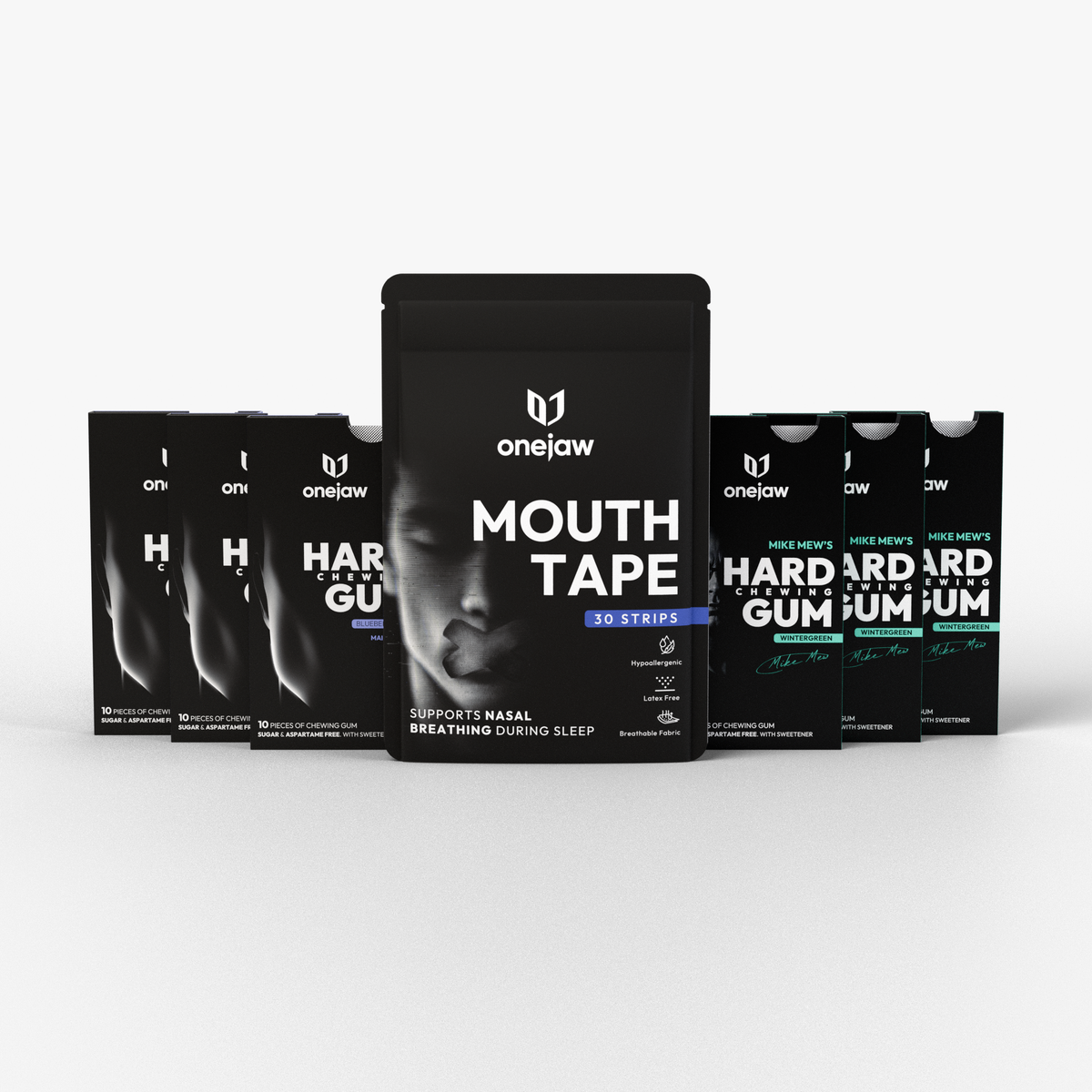
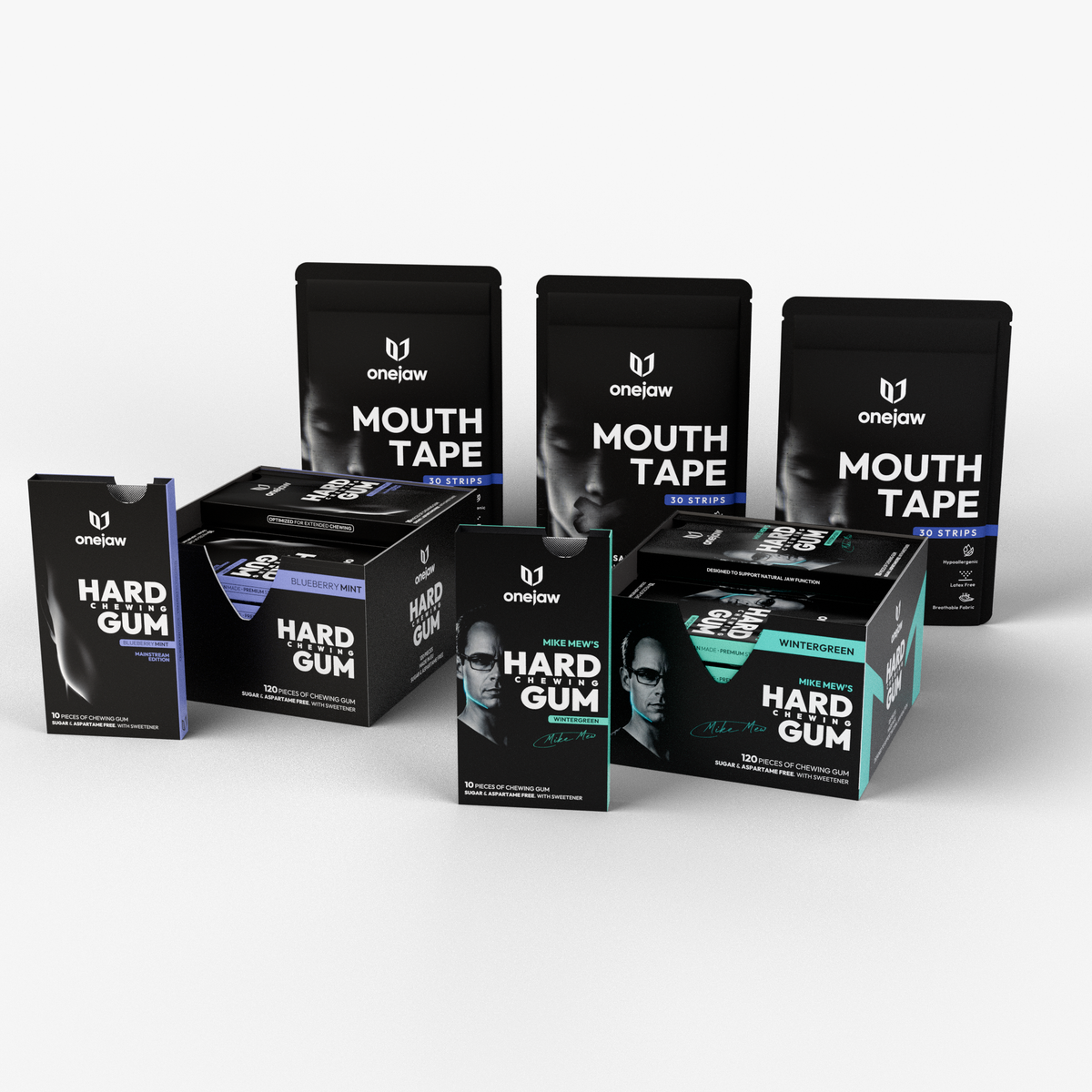
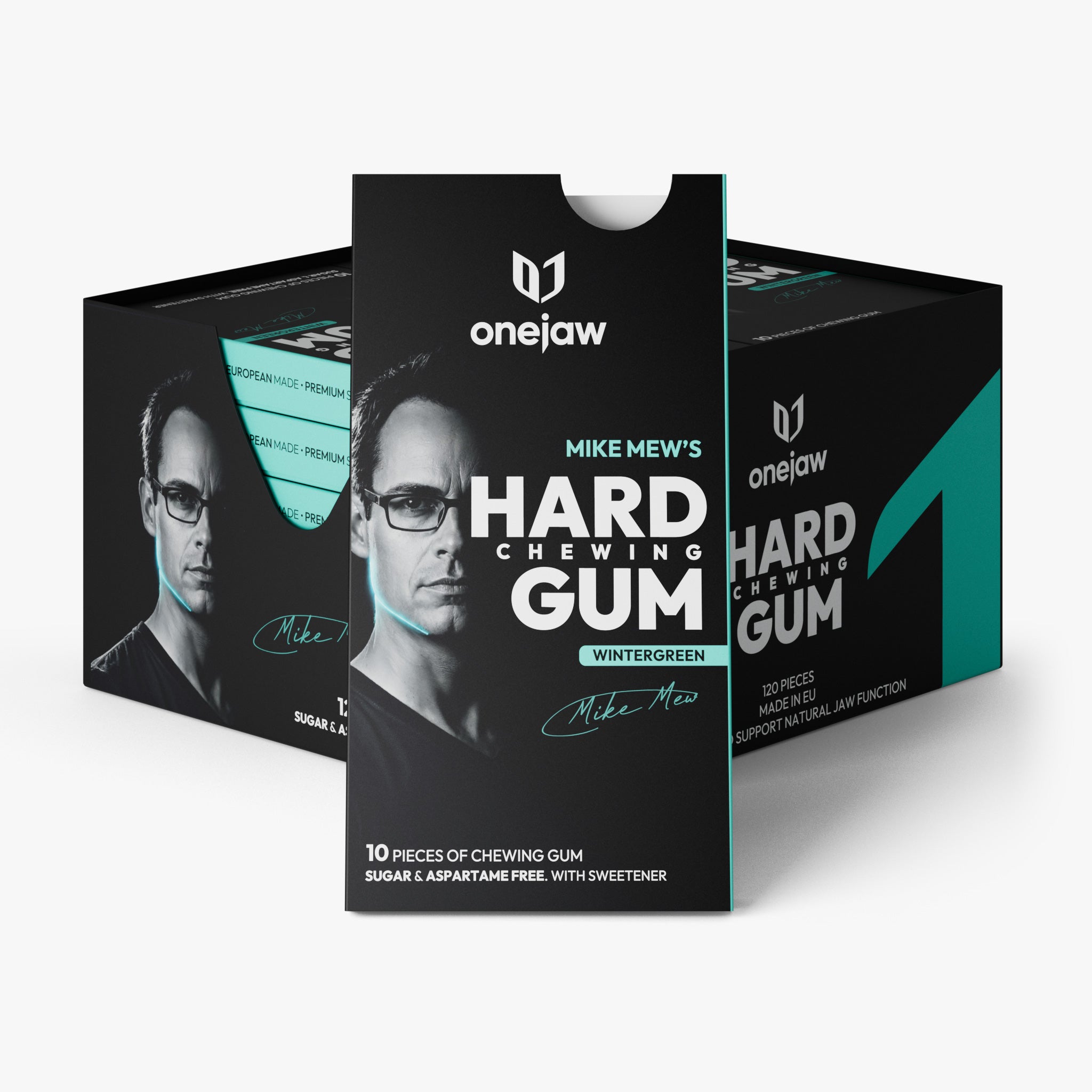
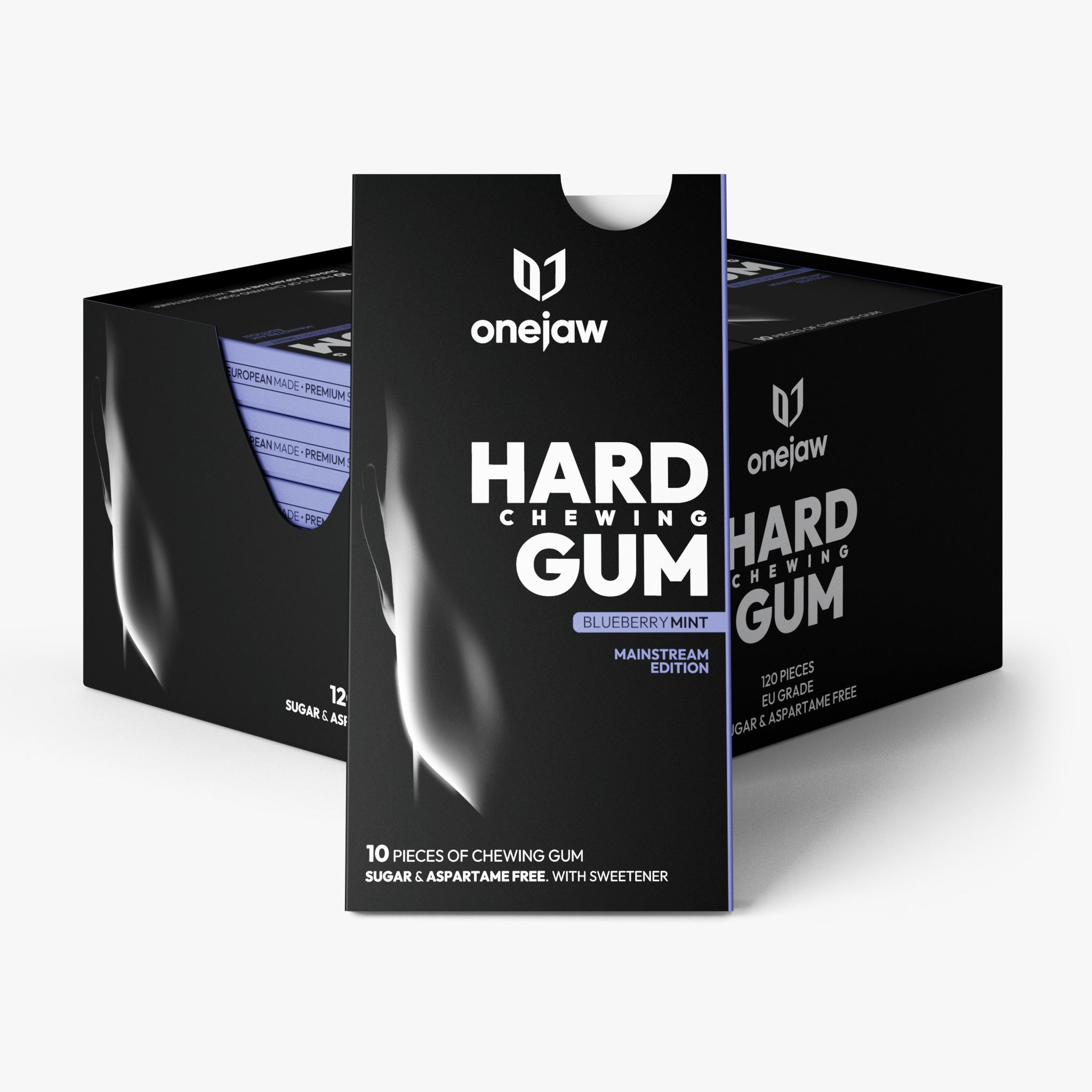
Mike Mew Edition Hard Jawline Gum

Mouth Tape for Mouth Breathing | ONEJAW
[ The ideal hardness ]
HARDER ISN'T BETTER. ENGINEERED IS.
Maximum hardness trains nothing. It strains the joint and ends the session early. ONEJAW sits in the range where you can chew with full range of motion, daily, without your jaw paying for it.
Enough load to train. Light enough to repeat daily. The zone endurance and tone are built in.
Frequency over force
Jaw tone is built by many controlled chews, not a few brutal ones. The resistance is set so the count stays high.
Endurance, not strain
The target is muscle tone that holds your face all day — trained the way posture is trained, not the way biceps are.
Built for the joint
Vertical chewing at medium resistance keeps the load on muscle, not on the TMJ. If it hurts, it's too hard. Ours doesn't need to.
[ Consistency stories ]
REAL STORIES.
Let customers speak for us
I highly recommend this product!
I used to experience occasional jaw pain when chewing, and I eventually realized that it was related to muscle weakness. Hard Gum has helped me strengthen my jaw muscles and completely get rid of the discomfort. I no longer experience any pain when chewing.
I’m extremely satisfied with the results and would absolutely recommend Hard Gum to anyone looking to strengthen their jaw!

Excellent gum! Would recommend it 100%
Best hard gum on the market. By far. Great for jaw development. My 10 year old son loves it.
Tres facile
J’en mets deux pendants mes séances et je vois bien la différence
La dureté du chewing-gum reste constante
Very good gum i must say that after i chew it for like an hour i felt my jaw muscle really sore, I reccomend it a lot

Great taste and just the right amount of firmness. You can really feel your jaw muscles working without putting too much strain on them. I'll definitely keep using it!
great experience
great, I use it every night.

Addictive. The texture of this gum is amazing. It's really comfortable to chew on with enough substance that actually feels like youre working your mouth.
Seeing Results after first pack, I had a decent jawline but noticing more definition. Received compliment from a friend about my jawline saying it looked more "defined" without mentioning using this product. Taste is pretty good too.
This is an excellent product. The onejaw gum tasted nice, kept its chewyness, and will be my go-to gum into the future. Also, cool pack!
Thx it really helps me train my jaw muscles 💪🏿❤️
very good
[ The thinking behind ONEJAW ]
FAIR QUESTIONS.
Why not just chew the hardest gum possible?
Facial transformation is not driven by brute force, but by how long and how consistently the muscles work.
In discussions with leading orthotropists and orthodontists, we learned that extremely hard gums create tension in the jaw and neck, which limits effective chewing.
ONEJAW was designed with the perfect resistance to allow for the right chewing that supports overall facial development.
Isn't harder always better for muscle training?
Not for this muscle group. Jaw tone is endurance, closer to posture than to a bench press. High repetition against moderate resistance builds it; occasional maximal effort mostly builds soreness.
How long until I notice anything?
Weeks, not days. Most people feel the muscles working in the first sessions and notice tone changes over 4–8 weeks of daily use. Slow is the honest speed. Anyone promising days is selling you something.
Why would chewing more frequently matter?
Because facial muscles respond to consistent, controlled use, not single hard efforts.
Chewing more times keeps the muscles active for longer, building endurance and tone, which supports facial structure more effectively than a few hard bites.
Is it safe for my jaw joint (TMJ)?
The protocol is built around it: vertical chewing, medium resistance, sessions capped around 30 minutes. If you have an existing TMJ condition, check with your dentist first, and stop if anything hurts.
Something else on your mind? Ask us directly
